Showing posts with label rattata. Show all posts

Saturday, September 7, 2013

Who's That Pokémon? #019 Rattata

#019 Rattata (a.k.a. Koratta)

Originally dubbed "Rattatak" in English, Rattata is named after a combination of rat and attack.  The Japanese ko is added, meaning "child" or "small," signifying that this is a young Ratta (the Japanese name of the evolved form Raticate).  Despite being called a rat, Rattata is more of an average field mouse, and is one of the closest Pokémon to being a straight up actual animal.

From the Pokédex:  Its fangs are long and very sharp. They grow continuously, so it gnaws on hard things to whittle them down. Bites anything when it attacks. Small and very quick, it is a common sight in many places.  If you see one, it is certain that 40 more live in the area.  It appears to be jittery and unable to remain still.

Gnawing, speed, and an overwhelming population define Rattata, just like real mice.  These features are exaggerated in the games, via Rattata's Hyper Fang and Quick Attack moves.  And as you'll see below, you can not go two steps in a wild area without encountering at least one of these creatures.

Generation I Moveset and Strategy

Despite being based around it's sharp bite, Rattata can only learn Bite via GSC tradeback.  But it's Hyper Fang and Super Fang more than make up for it.  Like a lot of Normal Pokémon, Rattata can also learn some elemental attacks through TM, but not nearly as many as the more "supernatural" Pokémon like Clefairy or Jigglypuff.  It's best to stick with Normal attacks for this one.


Super Fang - Normal

Focus Energy - Normal

Body Slam - Normal

Dig - Ground

This is a modified version of Raticate's best moveset.  Super Fang is a must as it automatically halves any Pokémon's HP (even Ghost types), redeeming Rattata in a big way.  Body Slam is the best Normal type move it is capable of learning, seeing as how Hyper Beam is reserved for evolved forms.  To take up that empty slot, Focus Energy can be used to increase the chances of Critical Hits (as long as you use it in Stadium where the effects work, because otherwise, you should just use Quick Attack).  To handle those Pokémon that can't be hit by Normal moves, I selected Dig, which is very strong in RGBY.  Rattata's low special prevents other attacks from packing enough punch to be useful (although Bubblebeam can take down the Rock/Ground types).

Generation I Sprites
  

All of these sprites are decent, but I'm going to give the crown to the Red/Green sprite.  Maybe I'm just so tired of seeing the Red/Blue one, but I like the less threatening pose of the first one.  But the Yellow one definitely doesn't work for me.  It's just standing there, with no emotion behind its eyes.  The other two are at least active.

Generation I Locations

Rattata are everywhere.  Specifically on the grassy plains of Routes 1, 2, 4, 9, 16, 21, and 22 in Red/Green/Blue.  The Rattata population increases by over 100% in Yellow as more Rattata can also be found in Routes 3, 5, 6, 7, 8, 10, 11, and 18, as well as the abandoned Pokémon Mansion on Cinnabar Island (I guess they all hitched a ride on aboat).  They are the Zubats and Tentacools of the land.

Notable Generation I Rattata

1.  Team Rocket's Rattata (Red/Green/Blue/Yellow and TCG)


It seems that Rattatas are a staple of many Team Rocket members' teams, despite their flaws.  For an organization that is built on using the strongest, rarest Pokémon, one wonders why they use such an abundant species.  One theory is that low-level grunts must start with a Rattata and prove their worthiness to receive better team members.

2.  Youngster's Rattata (Red/Green/Blue/Yellow and anime)


The only trainer class that uses Rattata more than Team Rocket is the Youngster.  To signify weakness and immaturity, early trainers are shown with a Rattata on their team.  Even Blue had one before it was deemed too weak for his team.  But Youngsters embrace them, making them their most used species.  And yes, I'm aware of a certain infamous Youngster with a fondness for Rattata, but we'll discuss him in Generation II.

3.  Lt. Surge's Rattata (TCG)


For some reason, Lt. Surge is given a couple Rattatas to bulk up his selection in the TCG.  Perhaps it is their physical similarity to Pikachu that earned them high ranks in his army.  I personally like to think that he brought along his childhood Pokémon to remind him of the days before the war fried his brain.

4.  Bill as Rattata (Pokémon Adventures)


Depending on which canon you follow, Bill has transformed into a Nidoran, Kabuto, and Clefairy.  But it's his turn as a Rattata that is the most perilous, where his weak frame allows him to be susceptible to Fearow attacks.  I'm sensing a theme of weakness running through all of these Rattata.  Hopefully some strong ones turn up soon.

5.  The Racing Rattata (Pokémon Stadium)


In the Kids Club game "Run, Rattata, Run," four Rattata race on a treadmill that hides hurtles, somehow.  This always struck me as one of the more fun games.  It's just a lot of timed jumping, but it was adorable to watch those critters scamper!

6.  Ratty (Pokémon Adventures)


To aid a young Yellow in defending herself, Red helped her catch this Rattata, and it soon became her main partner (when Pika wasn't helping her search for Red later on).  Ratty was raised to be kind and gentle, and was able to hold its own against other trainers, even taking on members of the Elite Four!  It just goes to show that with a little love and persistence, any Pokémon can be a worthy battler.

Final Thoughts

In elementary school, for a brief period, Rattata was my favorite Pokémon.  I thought it looked simultaneously cool and cute.  I kept it as a team member for a long time, giving it a variety of elemental moves like Water Gun and Dig to keep it useful.  Then I wised up.  Sure, every Pokémon deserves fans.  But they can't all be above average.

Rattata's Verdict - Don't Gotta Catch 'Em!

Thursday, September 5, 2013

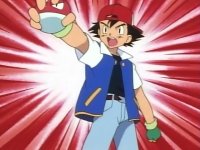
EP001 - Pokémon - I Choose You!


EP001 - Pokémon - I Choose You!

Original Airdates: April 1, 1997 (JP), September 8, 1998 (EN)
Written by: Takeshi Shudo

Synopsis:

Satoshi (Ash) of Pallet Town has just turned 10 and is able to begin his journey towards becoming a Pokémon Master. He stays up late dreaming about whether he’ll start with a Bulbasaur, Charmander, or Squirtle, but then he oversleeps and misses out on all three once he gets to the lab of Professor Okido (Oak). He meets his rival Shigeru (Gary) who taunts him and gets a head start on his quest. Satoshi is only able to take the last Pokémon left, an uncooperative Pikachu. His mother Hanako (Delia) bids him farewell.


As he heads out onto Route 1, Satoshi attempts to catch a Pidgey by himself since Pikachu refuses to help. As he fails multiple times, a Rattata steals from his bag. Finally, Satoshi thinks he has beaten the system by throwing a rock at a wild bird that turns out to be a Spearow. This angers the bird who proceeds to attack Satoshi and Pikachu, and then calls in a whole flock for reinforcement. The swarm chases the two into a river, where a girl named Kasumi (Misty) retrieves them on her fishing pole. She informs them of a Poké Center in nearby Viridian City, and Satoshi steals her bike as the Spearow flock returns.


As a storm gathers, Satoshi is knocked of the bike by the birds and uses his body as a shield to protect a badly injured Pikachu. Pikachu then intervenes and uses his powerful Thunder attack to take out the birds. As Satoshi and Pikachu come too, they see a large golden bird Pokémon fly over the resulting rainbow.

Who’s That Pokémon?
 
It's Pikachu, because Ash gets and nearly kills a Pikachu.

New Character and Pokémon Breakdown

Ash Ketchum (Satoshi)

Ash is the star of the anime, and like his counterpart Red from the games and manga, he has to start out a little naive and clueless as to how the world of Pokémon works (so that the audience can learn alongside him).  The American version makes him a little dumber though (such as moments when he can't recognize a common Pidgey), but he's a good protagonist early on.  His morals are clearly defined as he tries to respect Pikachu's wishes and protect him when it's clear that he's in way over his head.

Pikachu

Pikachu's origins are a little bit of a mystery.  It's unclear why Professor Oak has such a volatile Pokémon on his hands.  For some reason, Pikachu starts off completely closed off against humanity and attacks when threatened, but he warms up once he sees Ash put his own life on the line for him.  Pikachu's personality will remain positive from this point on, but it would have fun to see a little more strife between the two in these early episodes.

Misty (Kasumi)

Misty joins our lead duo as a more experienced trainer who is not above using violence to get her point across.  While someone like Gary would mock Ash for getting training basics incorrect, Misty would rather berate him for it.  But there seems to be a feeling that she is acting out of kindness, it's just that at this stage in the relationship, she cares more about herself/Pokémon than she does other people.

Professor Oak (Professor Okido)

Professor Oak is back, and while I enjoy this kinder incarnation of him, he still enjoys making stupid jokes and puns in the American version.  The Japanese version is a lot more tolerable and serious, but he'll lighten up as the series progresses.  But my major issue with him in this episode is why did he only plan on giving out three Pokémon if he knew that four trainers would be coming that day?  I could understand it if it were really a “first-come, first-served” situation and those who missed out would be unable to go on their journey.  But that would make more sense if there were dozens of children setting out on their journey, and he was all out of Bulbasaur, Charmander, and Squirtle by the time Ash arrived.  With four trainers in total, it seems idiotic on his part to not plan ahead for this situation.

Gary Oak (Shigeru)

Gary is just as much of a jerk as he is in the games, if not more so.  At least in other adaptations, we get the sense that Gary/Blue is just wiser than Ash and can't stand his behavior.  But here, he'd rather kick someone who he perceives as weaker than him while he's down.  He's much more of a bully and a pompous one at that (as highlighted by his fans and cheerleaders).  It's weird that he picks Ash to be a rival, but it just shows that he is more comfortable when he is in a clear position of power.

Delia Ketchum (Hanako)

Delia is stuck playing a basic supporting mother role (if not one who is a little too smothering).  We'll eventually pick up with her later to see more of her personality and the types of Pokémon she trains, but for now, she is just here to wish Ash good luck.

Pidgey

This is the first wild Pokémon Ash encounters, but it displays very little personality.  By being as neutral as possible, we can get a crash course in "How Not to Catch a Pokémon."  Pidgey doesn't put up a fight, and is only there to service the plot.

Rattata

Rattata is a little more spunky.  While it also behaves like a normal animal, the Pokédex suggests that it has targeted Ash's supplies because it believes he is a stupid and weak trainer.

 
The Spearow

In keeping with the Man vs. Nature theme of the episode, Ash upsets a particularly vengeful Spearow that he mistakes for a Pidgey.  Spearow are shown to stick together and use their hive mind to become an unstoppable force.  It's kind of a surprise that anyone makes it through Route 1 alive.  It's clear that they understand the differences in individual humans, as they don't attack Misty when she is standing right next to Ash.  Also, the one who gets bumped will carry a grudge for a long time.

The Starters, Bulbasaur, Charmander, Squirtle

While we don't see them in the flesh, we are reminded that usually, a trainer will start with one of these Pokémon.  Ash dreams about each one, but we'll have to wait to be properly introduced.

The Indigo Plateau Pokémon:  Gengar, Nidorino, Onix

On television, the night before his journey, Ash is watching what appears to be a battle between the Elite Four's Bruno and Agatha.  Based on the opening cinematic from the games, Nidorino fights Gengar, is quickly outmatched, and is then replaced by an Onix.  I love how the episode transitions from this reference into the episode proper.  A great way to bridge the games and the anime.

Dodrio

Instead of a rooster, Pallet Town has a Dodrio wake them up.  A nice early visual gag that reminds us we're not in Kansas anymore.

Wild Route 1 Pokémon:  Sandshrew, Mankey, Magikarp, Gyarados

As a way to remind us of the many Pokémon there are in the world, Ash passes up many opportunities as he is being chased by the Spearow.  It is during this moment that in my mind, I feel Ash has left Route 1 and entered Route 22, due to the presence of water (as well as a couple of these Pokémon which are available there).  But, as with the starters, Ash won't really meet these creatures until later.

Ho-Oh

As a final capper, an unknown Pokémon appears to Ash after his battle.  Although the American audience received the anime and the video games at the same time, Japan was already into the thick of the Pokémon craze and this episode provided their first hint that sequels to the original games will be made.  The Ho-Oh that appears was the first Generation II Pokémon to be unveiled to the world, and it’s clear that it was so new that it’s official colors hadn’t even been decided on yet.  This gave the original audience a taste of what was to come.  Ho-Oh is used as a symbol of hope and rebirth and is an exciting cameo to close the first episode on.

Setting

Pallet Town

Like in the games, Pallet Town is very sparse and gives us the impression that Ash really is a boy from the middle of nowhere.  His house is far removed from the center of town where Oak's lab is located and everything feels very quiet and quaint.  I prefer this to the bustling Pallet Town of the Pocket Monsters manga.

Route 1

While this path is a simple one, it has a lot more going for it than the Route 1 in the games.  Trees, hills, fields, and rivers create a more lush environment for Ash to explore.  In the next episode, we'll learn that it takes the average person multiple days to cross this territory.  It's scenes like this that make people wish there was a 3D Pokémon game to explore, with vast landscapes instead of areas that can be crossed in 30 seconds.

Japanese vs. American Versions:
- Ash meets Gary for the first time whereas Satoshi and Shigeru already know each other
- Prof. Oak makes stupid electricity puns
- Ash’s mother has a recurring gag in which she tells Ash to wear clean underwear every day
- Kasumi slaps Satoshi for allowing Pikachu to get so badly wounded.  This scene was cut out of the American version for being too violent.

BLAM!

Overall Review: A

This is a wonderful introduction to the world of Pokémon.  The building blocks for the fantasy world are being set in place and there is an air of dignity and seriousness that runs through the episode.  Although there are humorous elements, the focus is mostly on Satoshi’s learning experiences and his relationship with Pikachu.  Being a young trainer, it is interesting seeing him have to deal with the struggles of untrained Pokémon.  They way Pikachu comes through for him in the end feels natural and earned.  He sees that Satoshi is trying his hardest and is willing to endure a great deal of pain for him.  It is a genuinely touching moment.


The American version sticks pretty close to the original script.  What will eventually happen with the dub is that awkward jokes will be forced in and numerous edits to remove Japanese culture will be made.  But for now, things are pretty much the same.  I appreciate the attempts to tie the story to the video games, especially the opening with the Gengar vs. Nidorino battle.  As time goes on, the games will only be loosely used for the general structure of the story arcs.  But here, everything is as it is in the game, although more is added in (Kasumi is introduced early to establish her as a main character and drama is added in the form of the Spearow attack).

This is a great first episode and a great story.  It’s all down hill from here.

Wednesday, September 4, 2013

Cards of the Day: The Base Set Basics

Before we start breaking down each card, it's important to understand the basic gameplay that Base Set set up (and which later expansion sets would...expand upon).  We shall go through each of the 8 main types of cards you'll encounter:  the 7 Pokémon types and the supporting Trainer cards.


This type represents Pokémon who are Grass, Bug, or Poison types in the game.  The Bug Pokémon have similar weaknesses while most of the early Grass Pokémon also had Poison as a secondary type.  The TCG Grass Pokémon usually feature attacks that cause Special Conditions (Sleep, Paralysis, Confusion, and most often Poison).

Common Weakness:  Fire (for original Grass or Bug types) or Psychic (for original Poison types)

Example:  Tangela

HP:  50   Retreat Cost:  2   Weakness:  Fire   Resistance:  None
For a Basic Pokémon that doesn't evolve, Tangela has very low HP, but that's to be expected for its lack of rarity.

Bind (1G1C):  20
This is a better-than-average basic attack.  The damage is good for the cost and it has the bonus of possible Paralysis.  It takes two-turns to set up, but it should hold its own for a while.

Poisonpowder (3G):  20
Automatic Poison is wonderful to have in an attack and the high Energy cost is easier to swallow with the additional 20 Damage.  Hopefully your Tangela survives long enough to use this attack.

Strategies Against Tangela
Apart from the strong Stage 1 and Stage 2 Pokémon, MagmarCharmander, and Ponyta can take it out in one hit early in the game, and most others will have it gone in less than 3 turns, as long as you watch out for the Paralysis and Poison.

Final Grade:  Tangela provides great support for any Grass deck, and is easily the best of the Basic Grass Pokémon.  It's biggest setback is its HP, meaning fights will be short.  Just don't rely on it completely or else the deck could fall apart.  C


Only Pokémon who are Fire types in the games are represented as a TCG Fire.  Their gimmick is the common requirement to discard Fire Energy after using a Fire-based attack (representing the Energy being "burned up").  This means powerful attacks will always have to be replenished to be used effectively.

Common Weakness:  Water
Example:  Magmar

HP:  50   Retreat Cost:  2   Weakness:  Water   Resistance:  None
As with Tangela, the major point of concern is the 50 HP, especially since it should be able to old its own in a higher caliber fight with its strong attacks.

Fire Punch (2F):  30
This is a great starting attack, causing a lot of damage at in the early metagame.  It's also nice to use as a fallback between Flamethrower attacks, ensuing that Magmar isn't immediately crippled by the discarded Energy.

Flamethrower (2F1C):  50
If you manage to keep Magmar alive this long, this can be a wonderful heavy hitter.  But make sure you always have Fire Energy at the ready so you can at least use Fire Punch afterwards.  Otherwise, you could take out one opponent quickly and then be a sitting duck for whatever replaces it.

Strategies Against Magmar:
Nearly any Water Pokémon will make short work of Magmar, but Staryu and Poliwag especially only need the first two turns to wipe him out.  Just don't let it build any Energy and you should be fine.

Final Grade:  Magmar should be able to hold its own in a Haymaker-style battle, but there are too many threats once the bulky Evolution cards come out to play.  As Fire deck support, it takes away Energy from other Pokémon who will be needing it more (unless you stick with Fire Punch).  C


Water and Ice types from the games get folded into one general Water category (since most of them are part Water type anyway, and Jynx can be a Psychic Pokémon).  Water Pokémon tend to be the strongest during Base Set, with attacks that only build in power as the player adds extra Water Energy.

Common Weakness:  Lightning or Grass
Example: Poliwrath, Poliwhirl,  Poliwag 


HP:  90   Retreat Cost:  3   Weakness:  Grass   Resistance:  None
At 90 HP, Poliwrath is a little fragile for a Stage 2 Pokémon, but it can hold its own with the average Stage 2 opponent.

Water Gun (2W1C):  30+
Here is where the standard Water attack comes into play.  With an additional two Water Energy, Poliwrath can deliver 50 damage at once.  It makes sense for the standard 10 Damage per 1 Energy ratio, so the slow build may not be entirely worth the payoff.  Unless there is a Blastoise on the bench...

Whirlpool (2W2C):  40
This is one of the best attacks in the Base Set.  Not only does the damage match the Energy Cost, but you get to set the opponent back a step everytime you use this attack, preventing them from getting strong enough to overtake you.  Unless you're up against a Blastoise or Venusaur deck, this will be devastating for any opponent.  Also, the partial Colorless Energy cost means that Poliwrath can fit nicely into many dual-typed decks as well.

Strategies Against Poliwrath
As I said before, a Blastoise deck could certainly hold its own against Whirlpool's power and a Venusaur deck would just massacre Poliwrath.  Since Venusaur's Energy Trans can constantly move Grass Energy around the field, it will always be ready to take Poliwrath and its family out with its Grass buddies.

Poliwhirl Overview
HP:  60   Retreat Cost:  1   Weakness:  Grass   Resistance:  None
Poliwhirl is a great Stage 1 fighter.  It's quick and bulky compared to other Stage 1 Pokémon, meaning it can be great support for a Water deck.  Amnesia can cripple an opponent by taking out one of its attacks (which is useful when stalling).  Since a Pokémon is usually only fighting with one attack prepared anyway, Poliwhirl has effectively removed many early threats.  Doubleslap is a bit more standard, but it has the potential to deal 60 damage, which is nothing to scoff at.  C+

Poliwag Overview
HP:  40   Retreat Cost:  1   Weakness:  Grass   Resistance:  None
Poliwag isn't quite as impressive as its evolved forms.  It has basic stats and while Water Gun has the ability to deal 30 damage, Poliwag may not survive long enough to reach that potential.  Evolve it quickly, if you can.  D-

Final Grade:  If the Base Set weren't so chock full of great Water Pokémon, Poliwrath would be a common and formidable threat.  It would probably get overshadowed in a Blastoise deck (even though having a Blastoise on hand would be helpful to set Poliwrath up quickly).  But if you want to give Poliwrath a spin, you will find that it is a great participant in dual-typed decks, thanks to its Energy requirments.  B+

Here's a Sample Poliwrath Deck!
2 - Poliwrath
3 - Poliwhirl
4 - Poliwag
2 - Machamp
3 - Machoke
4 - Machop
2 - Starmie
3 - Staryu
4 - Bill
4 - Energy Removal
2 - Professor Oak
3 - Super Potion
10 - Water Energy
10 - Fighting Energy
4 - Double Colorless Energy


Even though the category only incorporates Electric-type Pokémon, the name is changed to Lightning.  Lightning Pokémon seem to have the worst gimmick in that their Electric-based attacks cause themselves harm in addition to their opponent.  Also, many of their attacks can cause Paralysis.

Common Weakness:  Fighting
Example:  MagnetonMagnemite 


HP:  60   Retreat Cost:  1   Weakness:  Fighting   Resistance:  None
Magneton has a very small amount of HP.  It is as if it is encouraging you to sacrifice it.

Thunder Wave (2L1C):  30
This is a very basic Lightning attack, dealing average damage and, potentially, Paralysis.  But since Magneton’s other attack removes it from combat, you’ll have to rely on Thunder Wave to get you through your battles.

Self Destruct (2L2C):  80
This attack causes much devastation.  Not only does it deal 80 Damage, but it also hits every other Pokémon in play with 20 Damage.  The downside is that you can only use it once.  Since your opponent receives a prize if you knock yourself out, you should only use it if they have many prizes to spare, if you are down to your last prize (since you’ll win first), or if you can take out multiple enemies.  Definitely do not use it if it’ll take out any of your other Pokémon or if it’ll clearly result in you losing the game.  Basing a deck around Magneton will be a poor choice.

Strategies Against Magneton
Aside from waiting for it to take itself out, you’ll want to stick with Fighting Pokémon.  Hitmonchan and Diglett can take it down in one fell swoop, which would be ideal.  You don’t want to give it the opportunity to use Self Destruct.  Also, Dugtrio and Onix have the bonus of being able to with stand the blow.

Magnemite Overview
HP:  40   Retreat Cost:  1   Weakness:  Fighting   Resistance:  None
Magnemite is basically a baby Magneton.  It has weaker versions of Thunder Wave and Self Destruct.  However, Magnemite fares a little better, in that it has a normal amount of HP for a Basic Pokémon, so it can really do some damage early.  D+

Final Grade:  The problem with Magneton and its junior is that their most powerful attacks knock them out.  Use with caution.  C+


Psychic combines both Psychic and Ghost types into one magical category.  Like a combination of Water and Grass types, Psychic types rely on damage multipliers and Special Conditions (usually Sleep and Confusion).  The higher amounts of damage are usually based on the conditions of the opponent (like number of Energy cards or damage counters they have on them).

Common Weakness:  Psychic (for original Psychic types) or None (for original Ghost types)

Common Resistance:  Fighting (for original Ghost types)


Example:  Jynx

HP:  70   Retreat Cost:  2   Weakness:  Psychic   Reistance:  None
Now that's more like it!  70 HP is a great place to start with a Basic Pokémon without evolutions.  It will be a while before Jynx goes down.

Doubleslap (1P):  10x
Unlike Tangela and Magmar, Jynx can start fighting right away! Yes, there is the possibility that its coin flips won't land on heads, but at least there is a chance!   But basically this attack is here to stall until Jynx is strong enough for Meditate.

Meditate (2P1C):  20+
"10 more damage for each damage counter."  That means, on a completely healthy opponent, Jynx would deliver 20 damage on the first turn, 40 damage on the next turn, and (if they are still alive) 60 damage on the final turn!  Nothing will survive after that...except for Colorless types, which will only be able to go down if another Pokémon has damaged them by 20 hit points first.  Still, those are few and far between, right?

Strategies Against Jynx
Yeah, unfortunately for many Psychic types, a single Rattata can out last them all, thanks to Psychic resistance.  Perhaps this is a way to tone down the Psychic powerhouses from the games.  This is why it's always a good idea to have some Colorless Pokémon on the support team to deal with any threats like this.  If you don't have any, make sure you have plenty of healing cards.  Also, Haunter is a great Psychic type that can take down fellow Psychics due to its lack of resistance.

Final Grade:  This is another fine addition to the Haymaker decks as it can protect threats against Hitmonchan (and take out other Jynxes).  While it probably couldn't carry a whole deck, it will hold its own for a long time.  B


Rock, Ground, and Fighting all become Fighting in the TCG.  I would have gone for a more earthy representative due those first two types, so much so that I'll refer to them as "R" for Rock in shorthand.  (Other sites may use "R" for FiRe to distinguish the two.  Don't get confused.)  Fighting types don't seem to have much of a gimmick other than high attack power for low energy cost and a high number of Hit Points (for those Rocks with high defense).  This makes them tied with Water types for the best type in the Base Set.

Common Weakness:  Psychic (for original Fighting types) or Grass (for original Rock or Ground types)

Common Resistance:  Lightning (for original Ground types)


Example:  Machamp, MachokeMachop


HP:  100   Retreat Cost:  3   Weakness:  Psychic   Resistance:  None
Machamp has the typical defense statistics of a Stage 2 Pokémon, which is great.

Pokémon Power:  Strikes Back
Machamp will deliver 10 Damage whenever it is attacked, which is just a nice little bonus that may prevent your opponent from attacking, especially if they can only dish out small amounts of Damage.  This allows Machamp to potentially dish out 100 extra points of Damage.

Seismic Toss (3R1C):  60
60 Damage is quite powerful, especially since there is no added drawback (like discarding Energy or damaging yourself).  Also, one of the Energy Cards required can be of any type, which increases the chances of Machamp dishing out this attack in any type of deck.

Strategies Against Machamp
If you want to avoid the Damage produced by Strikes Back, your best bet is to hit with as many high-powered attacks as you can.  Once again, Haunter will be a valuable asset when choosing Psychic types.  Not only can it take Machamp down in one shot, but also it will prevent Strikes Back from taking effect.  Plus, it is resistant to Seismic Toss.  In fact, no other Pokémon will be better than Haunter in this situation, so follow its lead by copying its attributes with your other Pokémon.

Machoke Overview
HP:  80   Retreat Cost:  3   Weakness:  Psychic   Resistance:  None
80 HP is great for a Stage 1 Pokémon, in theory.  Of course, it needs this to survive its attacks.  Machoke starts with Karate Chop, being the only Pokémon so far that has an attack that features a minus sign.  50 Damage is the ideal for this attack, but chances of you getting to use it to its fullest potential are slim.  It will probably have some Damage left over from being a Machop, so already the attack is weakened.  Even if you start with a healthy Machoke, it won’t last that way after one round.  This will definitely be the case if you plan to use Submission.  Like Seismic Toss, it delivers 60 Damage, but for the price of 20 Damage to oneself.  Eventually, you’ll find Machoke in the precarious position of not wanting to use Submission and not being able to use Karate Chop.  This unfortunate juxtaposition prevents Machoke from being able to stand on its own.  Plus, the high Retreat Cost hinders Machoke greatly.  C-

Machop Overview
HP:  50   Retreat Cost:  1   Weakness:  Psychic   Resistance:  None
Machop is basically an underpowered Hitmonchan.  It also possesses the ability to quickly deal 20 Damage with Low Kick.  This plus its higher-than-average HP of 50 makes Machop the best Basic Pokémon that is part of a three-stage evolution.  Although you’d be better of using Hitmonchan to support a Fighting deck, Machop is a great fighter for the beginning of any battle.  D+

Final Grade:  Machamp is the first powerful Pokémon Card that many players encountered, thanks to it being the star of the Starter Deck.  Its family is solid, in that they have powerful attacks and high HP so that they last long on the battlefield.  A-

Here's a Sample Machamp Deck!

4 – Machamp
2 – Machoke
4 – Machop
2 – Dugtrio
3 – Diglett
4 – Electabuzz
3 – Pokémon Breeder
4 – Super Potion
4 – Energy Retrieval
2 – Professor Oak
2 – Pokémon Trader
3 – Bill
17 – Fighting Energy
6 – Lightning Energy


The oddest category of the bunch encapsulates Normal, Flying, and Dragon types.  Probably based on the idea that Normal is the default type and its Pokémon can learn a variety of moves, Colorless Energy means that any type of Energy can fulfill its cost.  Conversely, an Energy Card that is Colorless Energy based will only apply to Colorless Energy attack costs (as opposed to being useable for every type).  Since all Flying types are dual-types, Flying can easily blend in with the neutral Colorless.  And since there are only three Dragons (and two in Base Set), they get the Colorless treatment as well.  Because there is such a large variety, we get a lot of wild cards, gimmick cards, and plain old average cards in this batch of Pokémon.

Common Weakness:  Fighting (for original Normal types), Lightning (for original Flying types), or None (for original Dragon types)

Common Resistance:  Psychic (for original Normal and Dragon(?) types) or Fighting (for original Flying types, as well as Pokémon of other TCG types that are part Flying)The write to be shown on the right side
Example:  Raticate, Rattata


HP:  60   Retreat Cost:  1   Weakness:  Fighting   Resistance:  Psychic
Here is another solid Stage 1 Pokémon.  With a speedy retreat cost and a Resistance, Raticate plays very well defensively.

Bite (1C):  20
No surprises here.  20 damage for only one Energy?  Sounds like a good deal to me.

Super Fang (3C):  ?
Ah, let's stop and put our math skills to use, kids!  Like in the games, Super Fang deals damage equal to half of the opponent's remaining HP.  But since the TCG only deals in multiples of 10, you must round up to the nearest 10.  So once an opponent is at 40 HP, you'd might as well use Bite to take you home.  It's great for getting a lot of HP out of the way at first, but eventually, you'll have to use Bite twice to finish the job.

Strategies Against Raticate
Get your Fighting Pokémon out there.  As with Magneton, Hitmonchan and Diglett are your best bets.  Also, a Machop can nip a pesky Rattata problem in the bud.  Just keep your Psychic Pokémon away because they'll never be able to do any damage.

Rattata Overview
HP:  30   Retreat Cost:  0   Weakness:  Fighting   Resistance:  Psychic
For a weakling, Rattata is great!  It may not last beyond two rounds but it starts hitting hard right away.  Like Raticate, Rattata also knows Bite for the same attack cost and damage.  And, as we said, unless it's up against a Haunter, Rattata can just start mowing down Psychic types if the opponent isn't careful.  It won't hold up in the deep metagame, but it is one of the best opening round players.  D+

Final Grade:  Raticate is surprisingly strong for a "common" Pokémon, and would benefit nearly any deck it finds itself on (but it can't hold its own deck at all).  C+

Trainers

Trainers are an essential part of any Pokémon deck.  While many of them can shake up the game with strange effects, the best ones are those that get you to your goals as quickly as possible.  Usually that's setting up your strongest attackers, but there are also some neat combos that can unfold when used in tandem.  The following cards are the most basic staples of any deck.


Bill:  There's nothing that beats the joy of drawing cards in a Pokémon game.  Each draw strengthens your hand, so getting to draw 2 at once!  I have never seen a deck without a Bill in it because its so useful to get to the cards you want.  A


Energy Removal:  Perhaps only slightly more fun than drawing cards is setting your opponent's back a turn by removing Energy.  Since only one Energy card can be attached per turn, a well-timed Energy Removal can ruin many a plan.  They aren't seen in as many decks as they should be.  A-


Gust of Wind:  Sometimes, you find yourself facing a much stronger opponent than you anticipated.  Or maybe you see a weakling on an opponent's bench ready to go down in one hit.  In those cases, a little Gust of Wind can ensure an easy victory.  But sometimes its better to focus on your own stength than your opponent's weakness.  B


Potion:  Keep your fighter kicking just a little bit longer with a Potion!  It comes in stronger varieties, though.  B


Switch:  The alternate tactic for when a Gust of Wind might be used.  Instead of switching an opponent's Pokémon, you switch your own which is only useful when you aren't prepared to pay the Retreat Cost.  Sometimes that's needed when you've got a better Pokémon on the bench, or a slow attacker is just getting pummeled.  But I'd rather use Gust of Wind, if given the choice.  B